
Nov 13, 2025
Productivity
10 Client Communication Best Practices to Master in 2026
In today's competitive landscape, generic client interactions are a liability. True success hinges not just on what you offer, but how you communicate its value. While many professionals know the basics- be polite, respond quickly- few master the art of strategic communication that builds deep trust, anticipates needs, and drives long-term partnerships. Sticking to outdated methods means missed opportunities and weakened relationships.
This roundup goes beyond surface-level advice. We will explore 10 specific, actionable client communication best practices that separate top performers from the rest. Forget vague theories; this guide is built for execution.
You will learn how to implement structured note-taking, set crystal-clear expectations, and handle difficult conversations with confidence. We’ll provide practical steps, real-world examples, and show how tools like GLINKY can automate administrative work, freeing you to focus on what truly matters: the client. Prepare to turn your conversations from simple check-ins into powerful drivers of business growth. Each point is designed to give you a distinct advantage in building stronger, more profitable client relationships.
1. Master Active Listening with Undistracted Focus
Truly effective client communication best practices begin not with speaking, but with listening. Active listening means giving your complete attention to what the client is saying, understanding the core of their message, and reflecting that understanding back to them. It's about absorbing both their words and the intent behind them. This practice builds a foundation of trust and demonstrates genuine investment in the client’s success, ensuring no critical details are overlooked.
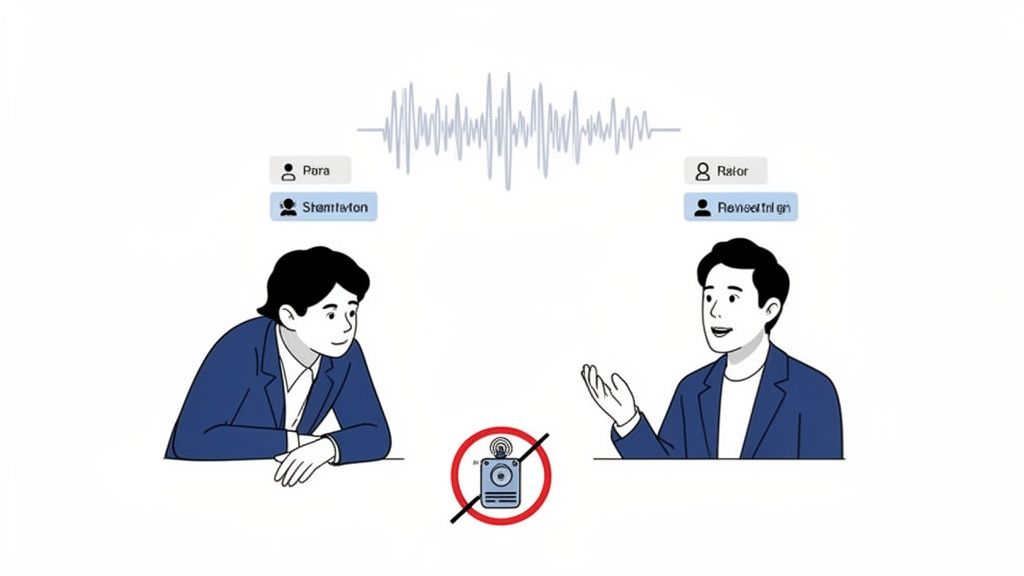
The challenge is maintaining this focus while also trying to capture notes, which often divides your attention. This is where modern tools can make a significant difference. For instance, GLINKY uses native speaker recognition to automatically attribute who said what during a call, without intrusive meeting bots. This allows you to stay fully present and engaged, confident that the key details are being accurately captured in the background.
Practical Application
Sales Teams: During discovery calls, sales reps can focus on building rapport and digging into a prospect’s pain points instead of frantically typing. The AI captures objections and requirements with speaker attribution, providing a clear record for follow-up and proposal creation.
Customer Success Managers: When a client is expressing frustration, a CSM can give them their full, empathetic attention. The system captures the specifics of the issue, which can be reviewed later to ensure a complete and accurate resolution.
Recruiters: Conduct more natural, conversational interviews without the awkwardness of visible recording tech. The focus remains on the candidate, leading to better evaluation and a superior candidate experience.
2. Structured Note-Taking and Documentation
After listening attentively, the next step in improving client communication best practices is transforming that conversation into organized, actionable information. Structured note-taking organizes raw data with clear sections for decisions, action items, and next steps. This practice ensures critical information is immediately accessible and prevents important details from being lost in messy, unstructured notes. Without a system, vital commitments and decisions can easily slip through the cracks.
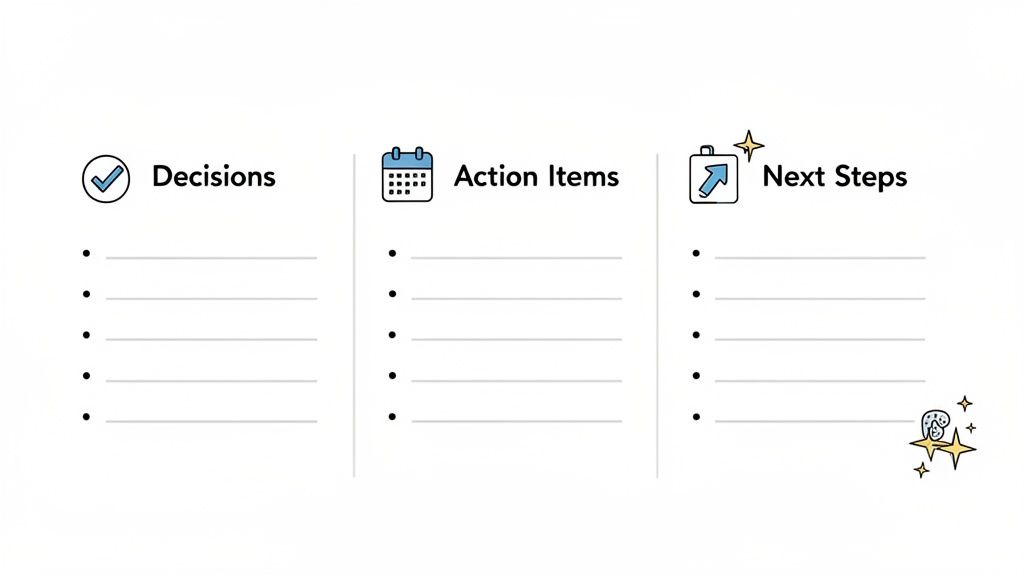
The primary challenge is creating this structure in real-time while staying engaged. This is where GLINKY provides a significant advantage by automatically generating clean, structured notes from your calls. The AI organizes the conversation into a clear format, which you can then quickly review and refine before distributing. For teams collaborating on complex client discussions, a solid understanding of transcription options is also helpful; a good guide to meeting transcription services can offer valuable context. Learn more about how to take meeting notes effectively to support this process.
Practical Application
Enterprise Sales: Teams can maintain consistent deal documentation across multiple stakeholder meetings. Structured notes ensure every decision and requirement is tracked, creating a single source of truth for the entire account team.
Customer Success: When transitioning an account to a new manager, CSMs can create structured handover notes. This guarantees the new manager has a complete history of key decisions and outstanding issues.
Recruitment Teams: Recruiters can systematically document candidate feedback and the rationale behind hiring decisions. This consistency is crucial for compliance and for making fair, data-driven choices.
3. Timely and Proactive Follow-Up Communication
A conversation's impact can diminish quickly without prompt follow-up. One of the most critical client communication best practices is to close the loop swiftly, reinforcing your commitment and maintaining momentum. This involves both timely responses and proactive outreach, where you anticipate client needs and provide solutions or next steps before they even have to ask. This approach turns a simple conversation into a strategic advantage, showing you are organized, attentive, and dedicated to their success.
Effective follow-up hinges on speed and accuracy, which can be difficult to manage manually after back-to-back meetings. This is where automation can support your process without losing a personal touch. For instance, GLINKY helps by automatically drafting follow-up emails right after a call concludes. This gives you a ready-made summary of key points and action items, which you can quickly review, personalize, and send, ensuring nothing is forgotten.
Practical Application
Sales Teams: Send a detailed proposal or a summary of agreed-upon next steps within an hour of a product demo. The AI-drafted email captures specific feature interests and questions, allowing the rep to add a personal note and send it immediately, capitalizing on the prospect's high engagement.
Customer Success Managers: Following a support call where a client mentioned a potential future need, a CSM can proactively schedule a check-in. This demonstrates foresight and a commitment to the client's long-term goals, building significant trust and loyalty.
Recruiters: Immediately after an interview, send a follow-up to the candidate outlining the next steps and timeline. This creates a positive candidate experience and keeps top talent engaged in the hiring process. By effectively tracking these commitments, you can learn more about how to track action items and ensure accountability.
4. Multi-Channel Communication Integration
Clients expect to connect on their preferred channels, whether that's email, phone, video calls, or instant messaging. This is why multi-channel integration is one of the most important client communication best practices. It involves creating a unified system where every interaction, regardless of the platform it occurs on, is consolidated into a single, chronological timeline. This approach eliminates information silos and ensures continuity, so every team member has a complete picture of the client relationship.
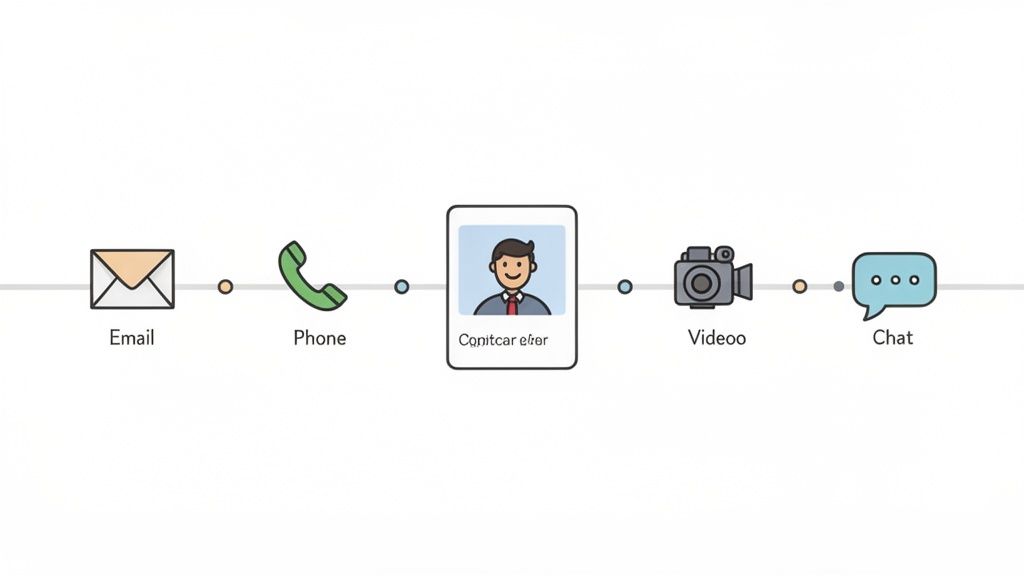
Without this integration, vital context gets lost between platforms. A promise made on a call might not be visible to the team member handling a follow-up email, leading to disjointed and frustrating client experiences. A tool like GLINKY helps solve this by automatically logging interactions from different channels into one accessible record, syncing call notes, and action items directly into your CRM. This ensures your team is always working from the most complete and up-to-date information.
Practical Application
Sales Teams: A sales rep can manage a deal that starts with a LinkedIn message, moves to a video discovery call, and continues over email. All interactions are tracked in a single timeline within their CRM, providing full context for crafting the final proposal.
Customer Success Managers: When a client reports an issue via email and then calls for an update, the CSM has a complete history at their fingertips. This prevents the client from having to repeat themselves and ensures a faster, more coordinated resolution.
Recruiters: Candidate communication often spans job board messages, emails, and video interviews. A unified timeline gives recruiters instant access to all past conversations, ensuring a smooth and professional hiring process.
5. Personalization and Account-Level Context
Generic, one-size-fits-all communication makes clients feel like a number, not a partner. True client communication best practices involve deep personalization, where every interaction is informed by the client's unique history, preferences, and past conversations. This approach demonstrates a genuine understanding of their business and challenges, building stronger, more resilient relationships. It means referencing specific goals, remembering past pain points, and tailoring solutions accordingly.
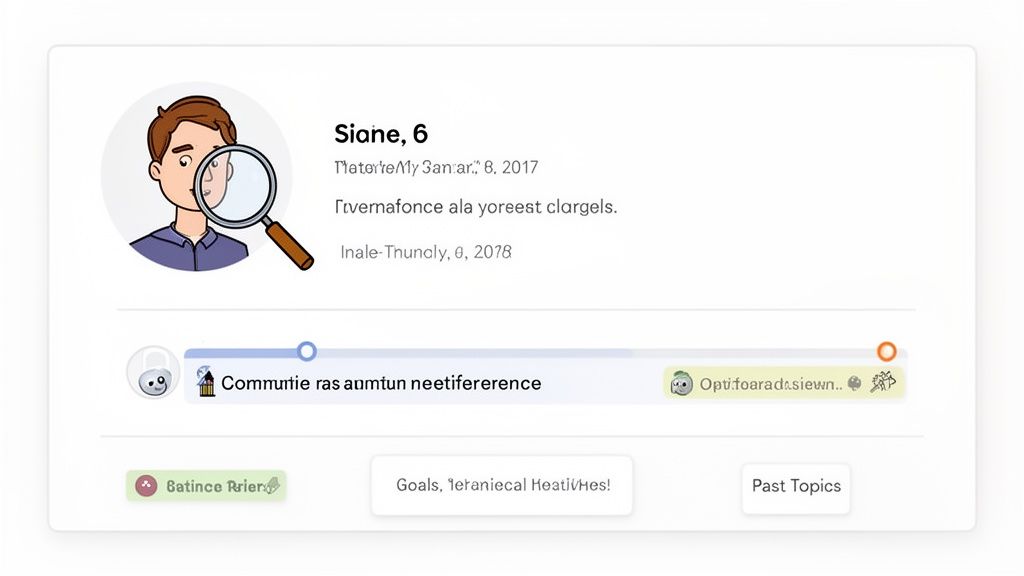
Maintaining this level of detail across multiple accounts and team members is a significant challenge. Key information often gets lost in siloed notes or forgotten between calls. This is where a centralized system becomes critical. For instance, GLINKY builds a unified contact timeline that captures the complete context of every interaction. This allows anyone on your team to quickly review past discussions, understand key decisions, and prepare for the next conversation with full awareness.
Practical Application
Account Executives: Before a proposal review, an AE can reference a competitor concern mentioned on a discovery call three months prior. This allows them to proactively address it in their presentation, showing they listened and have prepared a specific solution.
Customer Success Managers: A CSM can review onboarding notes to identify a client’s initial success metrics. During a quarterly review, they can directly tie recent product usage to those original goals, reinforcing the value provided and fostering long-term loyalty.
Recruiters: When speaking with a promising candidate for a new role, a recruiter can reference the career interests they shared in their first conversation. This personal touch makes the candidate feel valued and understood, improving the overall experience.
6. Clear Expectation Setting and Agreement on Next Steps
Misalignment on expectations is a primary cause of client dissatisfaction and project failure. Superior client communication best practices involve explicitly confirming a mutual understanding of decisions, timelines, deliverables, and responsibilities. This ensures everyone is on the same page, preventing future confusion and holding all parties accountable for their commitments.
One of the biggest challenges is capturing these agreements accurately while still managing the conversation. GLINKY helps solve this by automatically capturing and assigning next steps during the call. This allows you to review and confirm action items with clients before the meeting even ends, solidifying commitments and building a foundation of clarity and trust from the very beginning.
Practical Application
Sales Teams: Before ending a discovery call, a sales rep can quickly confirm the exact demo scope, required attendees, and a firm timeline for follow-up. This prevents scope creep and ensures the next meeting is productive for everyone involved.
Customer Success Managers: When onboarding a new client, a CSM can establish and document specific milestones and success metrics. This creates a clear roadmap for the client's journey and defines what a successful partnership looks like.
Recruiters: Conclude candidate interviews by clearly stating the interview timeline, the expected decision date, and what the next steps are for both the candidate and the hiring team. This provides a professional and transparent candidate experience.
7. Be Responsive and Accessible in Your Communication
In an environment where speed is expected, responsive and accessible communication is no longer a bonus; it’s a baseline requirement. Clients expect timely acknowledgments and clear channels to reach you. Responsiveness shows you value their time and inquiries, while accessibility ensures they can connect with you through methods that suit them best. This combination is a core part of modern client communication best practices, building the confidence that you are an attentive and reliable partner.
Being responsive doesn't always mean having an immediate solution. It often just means acknowledging a client’s message promptly and setting a clear expectation for when a more detailed response will arrive. This simple act prevents client anxiety and demonstrates your commitment to their needs. Accessibility is about meeting clients where they are, whether that's via email, phone, or a dedicated portal, and respecting those preferences.
Practical Application
Sales Teams: When a prospect submits an RFP inquiry, a sales rep can send a confirmation within a few hours. This initial email can acknowledge receipt and state they will follow up with preliminary thoughts within one business day, showing attentiveness from the very first interaction.
Customer Success Managers: Upon receiving a support ticket, a CSM can use an automated acknowledgment that provides an estimated resolution timeline. This manages expectations and assures the client their issue has been logged and is being addressed.
Recruiters: A recruiter who responds to candidate questions within a day stands out. This quick turnaround maintains candidate engagement and reflects positively on the company, creating a superior experience even for those not selected.
8. Lead and Prospect Qualification Through Discovery
Strong client communication best practices don't just apply to existing customers; they begin the moment you first engage a prospect. Thorough discovery is the art of understanding a potential client's needs, challenges, budget constraints, and internal decision-making processes before pushing a deal forward. This crucial step prevents teams from wasting resources on poor-fit leads and creates the foundation for presenting a perfectly positioned solution.
Executing this well requires asking the right questions and, more importantly, capturing the answers accurately. With tools like GLINKY, teams can focus on the conversation, knowing that detailed qualification information is being documented during the call. Its features also permit natural language searches to find prospects who fit an ideal customer profile, ensuring outreach is targeted from the start. This approach turns initial calls into valuable intelligence-gathering sessions rather than simple pitches.
Practical Application
Sales Teams: Use discovery insights captured during calls to find other prospects that match the same specific ideal customer profile. Verified contact data then allows for personalized outreach that references known industry pain points.
Recruiters: Quickly identify candidates who match key role requirements by searching through past interview notes and call data. This ensures you can surface the most qualified individuals with complete contact information ready for follow-up.
Customer Success Teams: Analyze discovery conversations from the sales cycle to identify potential expansion opportunities within existing accounts. Understanding a client's original goals helps frame conversations about new features or services that align with their long-term vision.
9. Regular Check-Ins and Relationship Nurturing
Exceptional client communication best practices extend far beyond active projects or transactions. Client relationships demand continuous investment to thrive, and regular check-ins ensure clients feel valued, not just as a source of revenue. This systematic approach maintains strong connections, uncovers new opportunities, and prevents relationships from fading over time, turning satisfied clients into long-term advocates.
Maintaining this cadence requires preparation and a clear purpose for each interaction. For instance, GLINKY’s timeline feature helps you review past conversations and commitments, identifying natural triggers for a check-in. This allows you to enter every call with context, prepared to discuss specific progress, industry insights, or relevant product updates, making the conversation valuable for the client. This consistent, value-driven contact solidifies your position as a trusted partner.
Practical Application
Account Executives: Conduct quarterly business reviews (QBRs) with key accounts to review performance, align on future goals, and identify expansion opportunities. Use past call notes to prepare a relevant agenda.
Customer Success Managers: Schedule monthly or bi-monthly calls to proactively check on product adoption, answer questions, and share success stories from similar users. This reinforces value and boosts retention.
Recruiters: Maintain a warm pipeline of passive candidates by scheduling brief, periodic check-ins. A simple outreach to share a relevant article or company update keeps you top-of-mind for when they are ready to make a move.
10. Transparency and Managing Client Expectations Realistically
Honest, transparent communication is a cornerstone of client trust and a vital client communication best practice. Setting realistic expectations about capabilities, timelines, and potential hurdles from the start prevents future disappointment. While it can feel tempting to promise the world, overpromising and underdelivering is a surefire way to erode credibility. Managing expectations realistically creates opportunities to exceed them and builds a stronger, more resilient partnership.
This involves being clear about what you know, what you don't, and providing honest assessments of any challenges. For further reading on this crucial aspect, you can delve into the importance of transparent communication with users. A commitment to transparency shows respect for the client's business and solidifies your role as a trusted advisor, not just a vendor.
Practical Application
Sales Teams: Instead of promising a lightning-fast implementation to close a deal, honestly discuss resource requirements and provide a realistic timeline. This prevents post-sale friction with the delivery team and sets the client relationship up for long-term success.
Customer Success Managers: When a client requests a feature the product doesn't have, transparently address the limitation. Rather than making a vague promise, explain the current functionality and explore effective workarounds, demonstrating a commitment to solving their problem today.
Recruiters: Be upfront with clients about the competitiveness of the talent market for a specific role. Clearly communicate realistic timelines for finding qualified candidates and manage expectations about salary benchmarks, preventing frustration down the line.
10-Point Client Communication Best Practices Comparison
Practice | 🔄 Implementation Complexity | ⚡ Resource Requirements | 📊 Expected Outcomes | ⭐ Key Advantages | 💡 Ideal Use Cases |
|---|---|---|---|---|---|
Active Listening and Speaker Recognition | Medium (speaker enrollment, audio tuning) | Moderate (good microphones, enrollment time) | Higher note accuracy and speaker attribution | Accurate speaker-specific capture; natural conversation | Sales discovery, support calls, interviews |
Structured Note-Taking and Documentation | Low–Medium (templates & training) | Moderate (templates, CRM integration) | Consistent records; 30–40% admin time saved | Searchable, actionable notes; fewer missed items | Enterprise deals, handovers, recruitment |
Timely and Proactive Follow-Up Communication | Low (automation + templates) | Moderate (email sync, calendar) | Faster response rates; improved follow-through | Rapid, reviewable follow-ups; reduced admin burden | Post-demo follow-ups, CS check-ins, recruiting |
Multi-Channel Communication Integration | High (multiple integrations) | High (integration maintenance, privacy controls) | Unified interaction history; fewer silos | Complete contact timeline; better handoffs | Cross-channel deals, support teams, recruiters |
Personalization and Account-Level Context | Medium (data hygiene, timeline use) | Moderate (documentation discipline) | More relevant interactions; higher trust | Tailored outreach using full account history | Account execs, CS managers, candidate screening |
Clear Expectation Setting & Next Steps | Low (process change) | Low (time to confirm, calendar sync) | Fewer misunderstandings; improved accountability | Clear ownership and deadlines; dispute reduction | Discovery calls, onboarding, interview planning |
Responsive and Accessible Communication | Medium (protocols + automation) | Moderate–High (staffing, escalation tools) | Higher satisfaction and retention | Reliable acknowledgments; faster issue resolution | Support desks, RFP responses, recruiter inquiries |
Lead & Prospect Qualification Through Discovery | Medium (playbooks + data) | Moderate (verified data, scoring tools) | Better-fit pipeline; improved close rates | Accurate qualification; faster pipeline hygiene | Prospecting, sourcing candidates, territory planning |
Regular Check-Ins and Relationship Nurturing | Low–Medium (cadence + templates) | Moderate (time, content prep) | Increased retention and expansion | Proactive value delivery; early issue detection | Account reviews, adoption check-ins, passive candidate outreach |
Transparency & Managing Client Expectations | Low (communication norms) | Low (documentation, ongoing updates) | Stronger trust; fewer surprises and disputes | Credibility through honesty; realistic commitments | Scoping, implementation planning, service delivery |
Turn Communication Insights into Action
Moving from theory to practice is where real growth happens. We've explored ten essential client communication best practices, from the nuanced art of active listening and structured note-taking to the strategic necessity of proactive follow-ups and transparent expectation setting. Each practice serves as a building block for creating a communication framework that is not just effective, but also repeatable and scalable across your entire team.
The common thread connecting these strategies is a commitment to shifting from reactive problem-solving to proactive relationship-building. It’s the difference between answering a client's question and anticipating their next one. It’s about creating a system where detailed notes from a discovery call seamlessly inform a follow-up email, ensuring no detail is lost and every promise is kept. This systematic approach is the foundation for turning every client interaction into an opportunity to build trust and demonstrate value.
From Good Habits to Great Systems
Mastering these client communication best practices isn't about a one-time effort; it's about embedding them into your daily workflow until they become second nature. The goal is to build an operational engine that makes excellence the default standard, not the exception. By consistently applying these principles, you create a powerful feedback loop:
Stronger Relationships: Clients feel heard, understood, and valued, leading to increased loyalty and retention.
Improved Efficiency: Clear communication reduces misunderstandings, minimizes rework, and shortens sales cycles.
Actionable Insights: Structured documentation of conversations reveals patterns, uncovers new opportunities, and provides valuable data for strategic decisions.
Think of it as building a "communication playbook" for your organization. When everyone on the team follows the same process for preparing for meetings, documenting key takeaways, and assigning clear next steps, the client experience becomes remarkably consistent and professional. This reliability is a significant competitive differentiator.
Your Next Step: Commit to One Change
The most effective way to begin is by choosing one practice to implement this week. Don't try to overhaul everything at once. Instead, pick the area that represents your biggest opportunity for improvement.
Is it structured note-taking? Commit to using a template for your next five client calls.
Is it proactive follow-ups? Schedule check-in reminders for your top accounts right now.
Is it managing expectations? Start your next project kickoff by explicitly defining what success looks like and agreeing on communication frequency.
By taking this small, focused step, you build momentum. The immediate positive impact you observe will provide the motivation to integrate the next practice, and then the next. True mastery of client communication is a journey of continuous improvement, built one conversation at a time. It's not just about talking to clients; it's about building a system that fosters genuine, profitable, and lasting partnerships.
Ready to automate the busywork and focus on what truly matters? See how GLINKY can automatically capture notes, assign action items, and sync every detail to your CRM, making these best practices your team's new standard. Discover a smarter way to manage your client conversations at GLINKY.
People also read
10 Sales Enablement Best Practices to Unify Your Revenue Engine in 2026
Productivity
Mar 13, 2026
How to Manage Sales Pipeline for Predictable Revenue Growth
Productivity
Mar 14, 2026
How to Qualify Leads in Sales Without Wasting Time
Productivity
Mar 17, 2026
What is Conversation Intelligence? A Practical Guide for Sales Teams
Productivity
Mar 18, 2026

Top 10 Sales Discovery Questions That Close More Deals
Productivity
Mar 25, 2026
Taking Minutes of Meeting: A Guide to Transforming Chaos into Action
Productivity
Feb 16, 2026
Action Items List: A Practical Guide to Drive Real Results
Productivity
Feb 19, 2026
Master the summary of a meeting for clear decisions and follow-ups
Productivity
Feb 22, 2026
Track Action Items: A Practical Guide to Using AI for Flawless Follow-Up
Productivity
Feb 17, 2026
Unlock: How to Take Notes on a Computer for Peak Productivity in 2026
Productivity
Feb 26, 2026
How to Record Google Meet: A Complete Guide for 2026
Productivity
Mar 4, 2026
12 Best AI Note Taking App Choices for 2026: The Definitive Guide
Productivity
Mar 6, 2026
How to Improve Customer Retention: Practical Tips to Boost Loyalty
Productivity
Mar 8, 2026
The 12 Best AI Meeting Assistant Tools for 2026: A Deep Dive
Productivity
Mar 15, 2026

Your Guide to the Ultimate AI Email Writer
Productivity
Feb 27, 2026
10 Essential Customer Success Best Practices for 2026
Productivity
Mar 1, 2026
Your Guide to Sales Call Recording Software in 2026
Productivity
Mar 2, 2026
How to Take Better Meeting Notes and Drive Real Results
Productivity
Mar 5, 2026
Top 10 Picks for best crm for small business
Productivity
Mar 3, 2026
What is an Ideal Customer Profile: A Guide to Driving Growth
Productivity
Mar 9, 2026
Automated meeting minutes: Turn talks into actionable notes
Productivity
Mar 11, 2026

The Top 12 AI Powered Sales Tools to Boost Revenue in 2026
Productivity
Mar 16, 2026
AI Note Taking For Meetings: Fast, Smart AI Notes That Drive Collaboration
Productivity
Mar 19, 2026
Understanding Transcription Service Cost: A 2026 Guide
Productivity
Mar 20, 2026
Master Your Meetings With The Note Taking Charting Method
Productivity
Feb 18, 2026
The Ultimate 2026 Guide: 8 Meeting Follow Up Email Template Scenarios
Productivity
Feb 20, 2026
Master the Art of Taking Meeting Notes for Actionable Outcomes
Productivity
Feb 25, 2026
12 Best Sales Lead Generation Tools to Boost Your Pipeline in 2026
Productivity
Mar 10, 2026
Translation Vs Transcription: Which Service Do You Really Need?
Productivity
Mar 12, 2026
Mastering the goals of a meeting to drive decisions and boost team alignment
Productivity
Mar 23, 2026
The 12 Best Free AI Email Writer Tools for 2026
Productivity
Mar 22, 2026
A Guide to AI Sales Enablement Platforms in 2026
Productivity
Mar 21, 2026
Automate Follow Up Emails: Actionable Insights for Boosting Sales & Efficiency
Productivity
Mar 26, 2026

Follow Up Email Subjects That Convert: Increase Opens and Replies
Productivity
Feb 17, 2026

Your Playbook for Outbound Lead Generation in 2026
Productivity
Feb 28, 2026
Your Essential Meeting Action Items Template to Drive Results
Productivity
Feb 23, 2026

Your Guide to Using an Email Writer AI for Maximum Impact
Productivity
Feb 23, 2026
8 Essential Ground Rules at Meetings to Maximize Productivity in 2026
Productivity
Mar 24, 2026
Otter.ai vs Glinky
Productivity
Feb 5, 2026
AI Tools for Startup Founders [2026]
Productivity
Feb 4, 2026
Best AI Tools for Startups [2026]
Tools
Feb 3, 2026
Sales Call Notes: How to Capture Every Detail Without Losing the Deal
How to
Feb 2, 2026
How to Take Meeting Notes: 7 Methods That Actually Work [2026]
How to
Jan 14, 2026
![AI Meeting Minutes | Free Forever [2026]](https://framerusercontent.com/images/zYQGRjgLX63tiouLTK65LvCcjK8.png?width=402&height=263)
AI Meeting Minutes | Free Forever [2026]
How to
Jan 13, 2026
![How to Record Zoom Meetings Without a Bot [2026] 3 Easy Methods](https://framerusercontent.com/images/gGoQV8bPb9zR5weVruinbjaxO0.png?width=402&height=263)
How to Record Zoom Meetings Without a Bot [2026]
How to
Jan 9, 2026
Bot-Free AI Meeting Notes: We Tested the 6 Best Tools in 2026
Tools
Jan 8, 2026
Glinky vs Fireflies.ai
Tools
Jan 7, 2026
15 Best AI Tools to Boost Your Productivity in 2026
Productivity
Jan 6, 2026